














Since 1927
The History of the Koziol Family and Company
The company’s development is inseparably linked to the personal history of the Koziol family. It was in 1912 that Bernhard Joseph Koziol moved to Erbach in the Odenwald with his young family to lease the Count of Erbach’s ceramic workshop. Here, he was finally able to put his own ideas into practice and develop new manufacturing methods and glazes. However, the First World War abruptly interrupted his career, and the new beginning after the war was marked by setbacks.
His son Bernhard began helping out in the pottery at an early age and, alongside this, learned to draw at Sunday school.
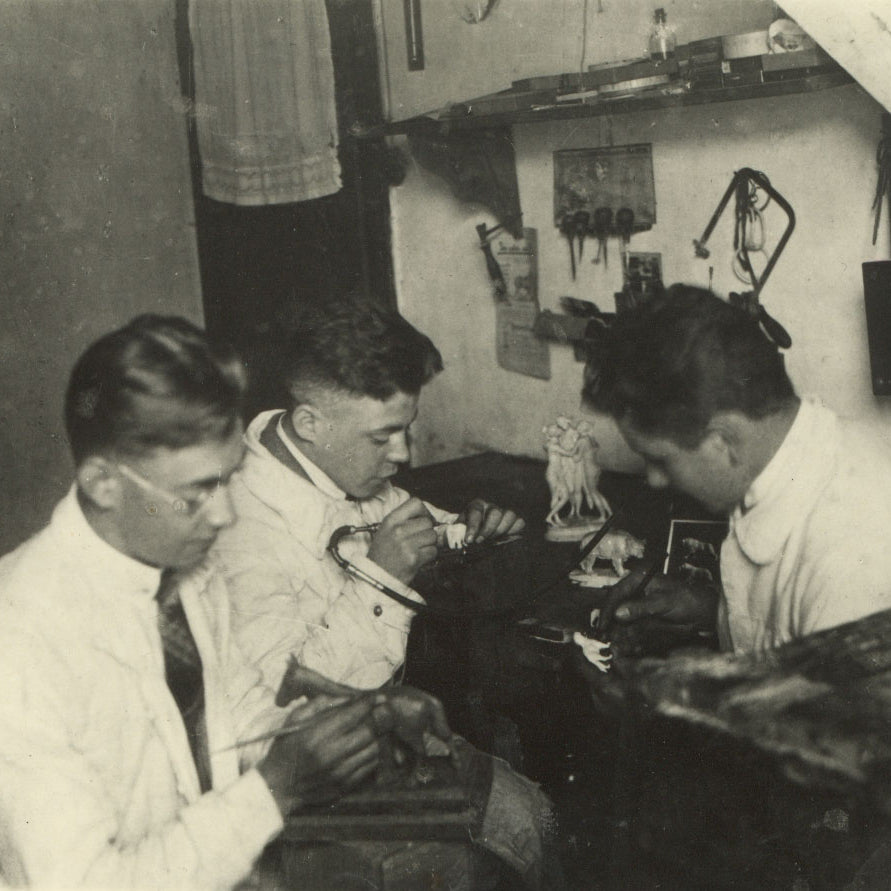
After completing elementary school, he trained as an ivory carver – and so the story continued:
1927
It all began with ivory.
On November 27, 1927, 19-year-old Bernhard Koziol founded his own ivory carving workshop as a one-man business. In his bedroom, using a converted sewing machine, he created delicate jewelry and miniature ivory figures.

Since 1783
Ivory Art from the Odenwald
Ivory craftsmanship has a tradition spanning more than 200 years in the Odenwald region. Count Franz I of Erbach-Erbach (1754–1823) established the art of ivory turning in the Odenwald in the last quarter of the 18th century. As a result, Erbach developed into the “German Ivory Town.”
Even today, ivory carvers are still trained in the Odenwald, although for many decades they have worked exclusively with alternative materials such as horn, mammoth tusks, and tagua nuts.
1935
The new material.
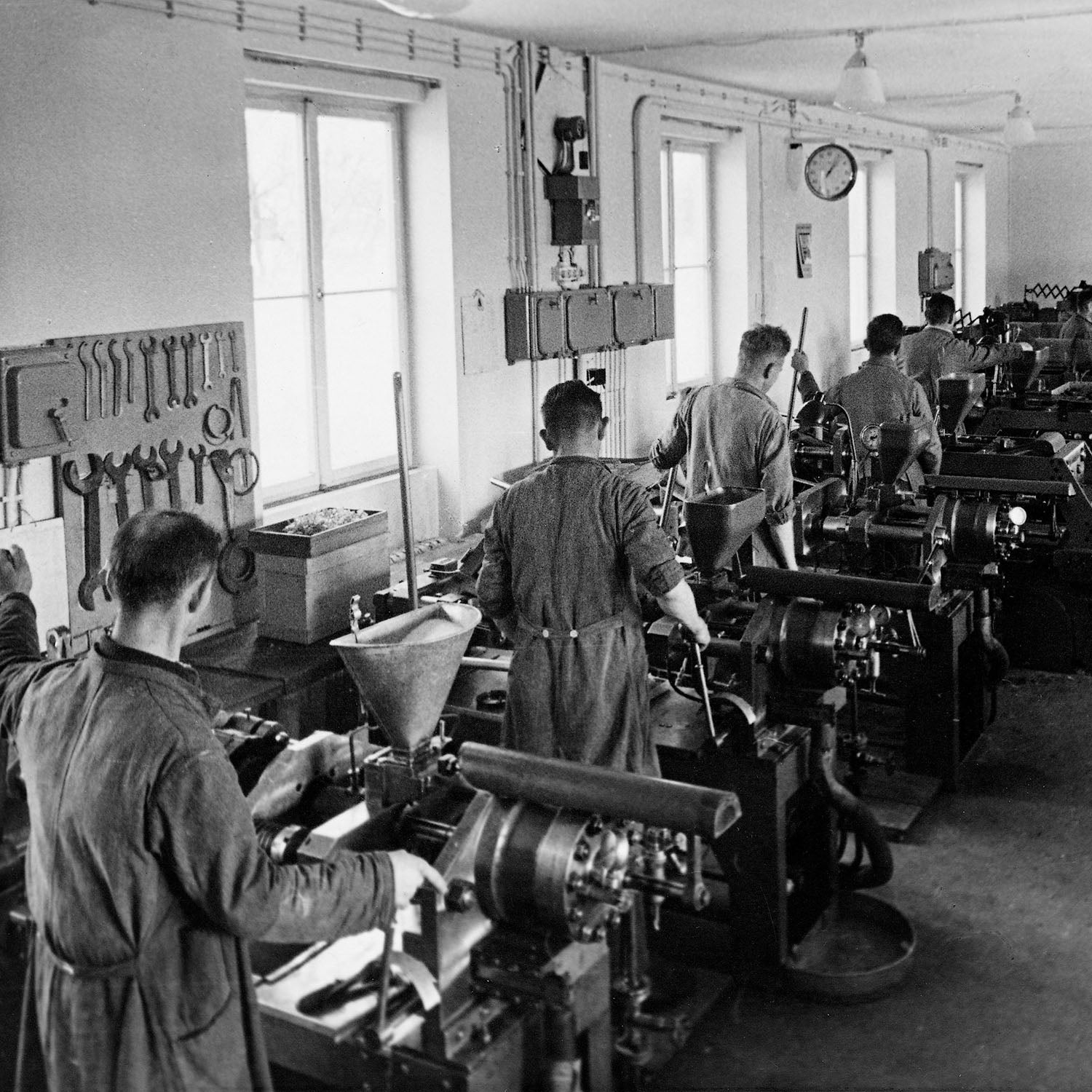
The global economic crisis of 1929 marked a turning point and called for creativity and new manufacturing methods. In 1935, Koziol produced jewelry made entirely from synthetic plastics for the first time. At the time, injection molding machines represented a technological revolution: a material unlike anything seen before, a completely new technology, and with it, endless possibilities for new products.
1940
War Years
During the Second World War, Koziol produced jewelry that glowed in the dark, as well as badges for the Winter Relief of the German People. At the end of 1940, however, the production of jewelry was officially banned, and only goods considered essential to the war effort could be manufactured. These included combs, buttons, and cutlery, as well as lenses for gas masks.
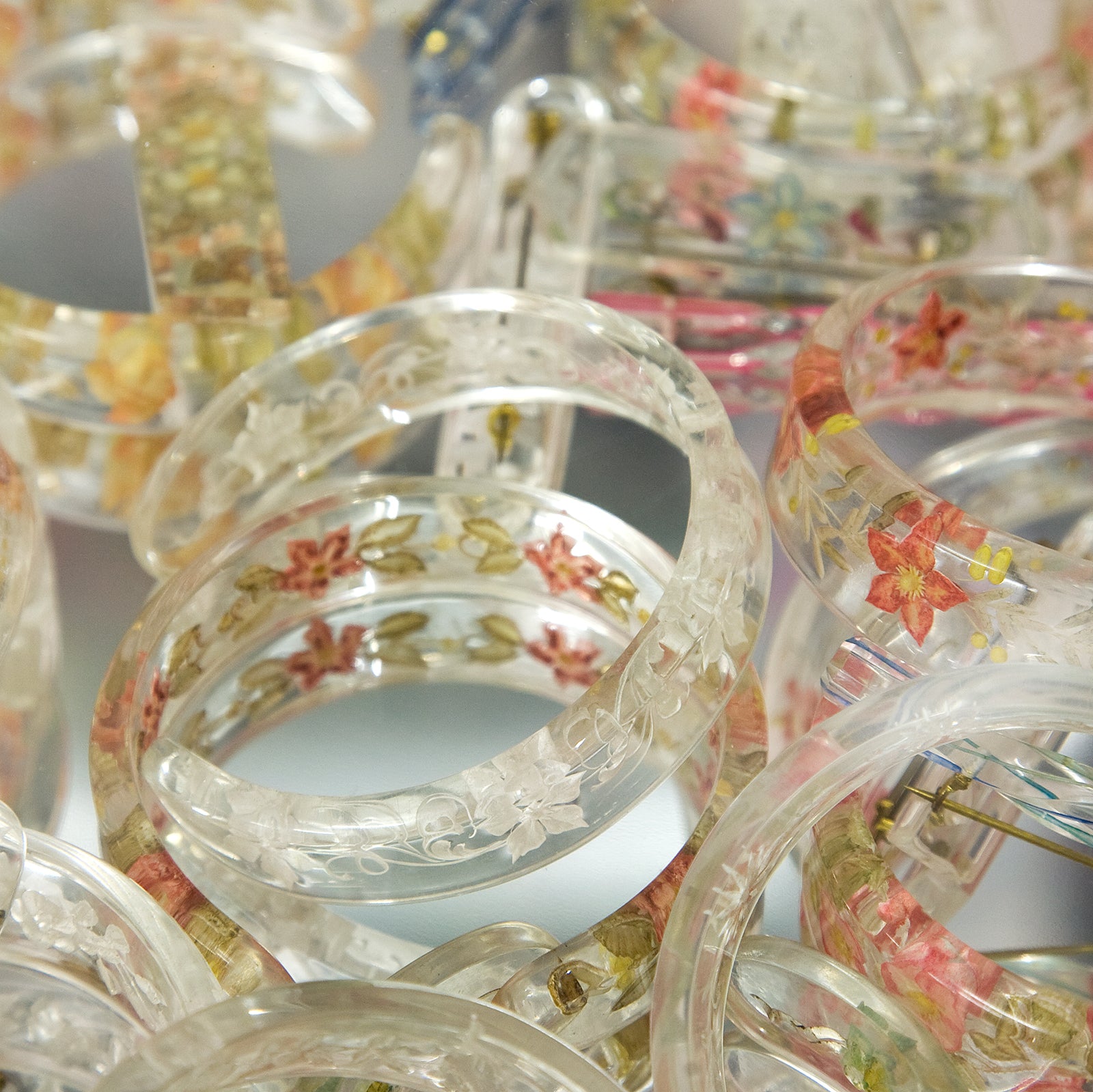
After the war, plastic granules were no longer available for production. Ingenuity came to the rescue: Koziol purchased stocks of unused Plexiglas aircraft canopies from the Röhm company in Darmstadt and used the material to make bangles and brooches.
1950
Souvenirs, Souvenirs!
The 1950s: Germans discover travel. The post-war economic boom and increasing car ownership sparked a growing desire to travel, culminating in a nationwide travel craze.
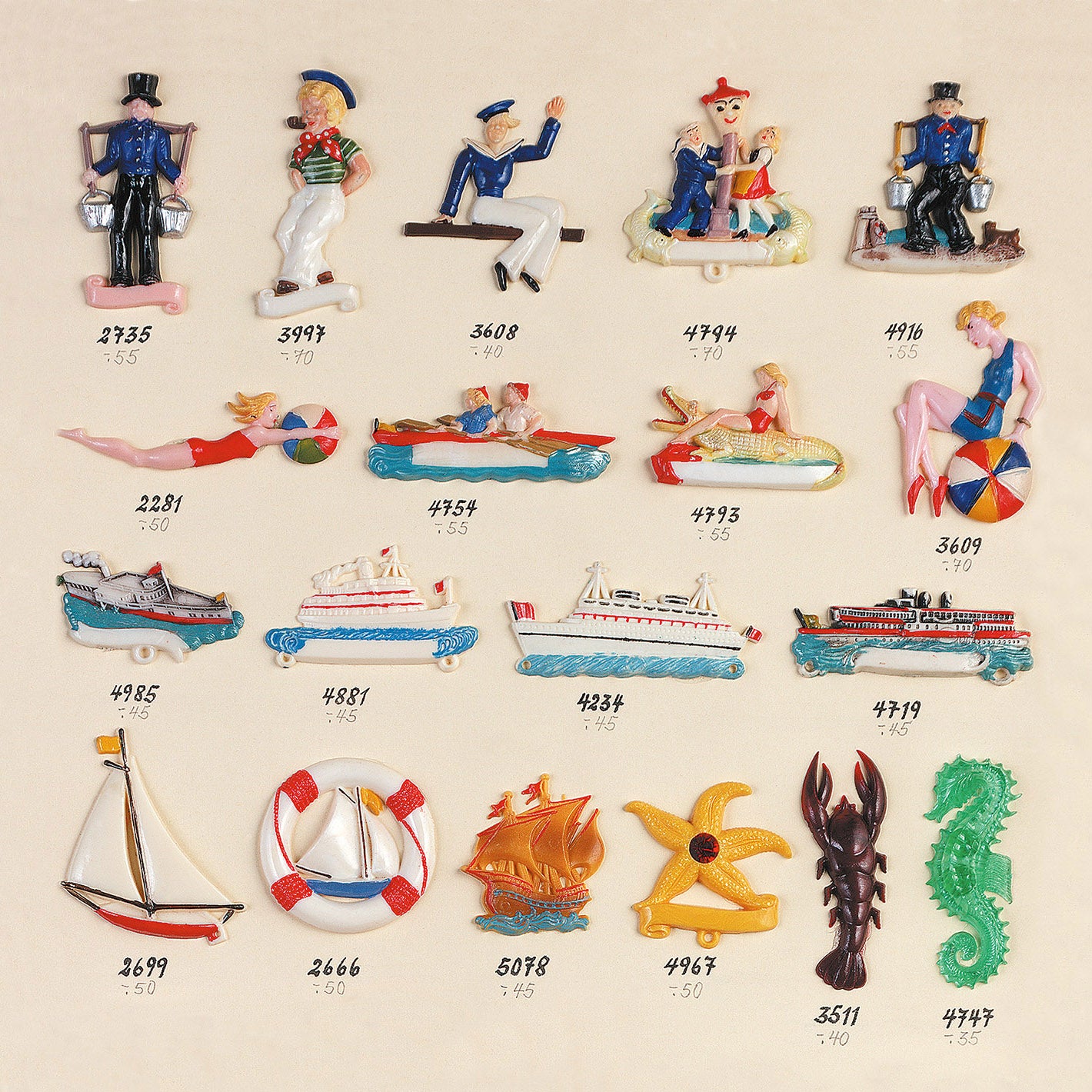
The former jewelry range quickly evolved into countless new designs for affordable souvenir brooches, which became highly sought-after collector’s items. Whether a bathing beauty or a Black Forest girl, there was hardly a place in Germany that wasn’t supplied by Koziol.
1950
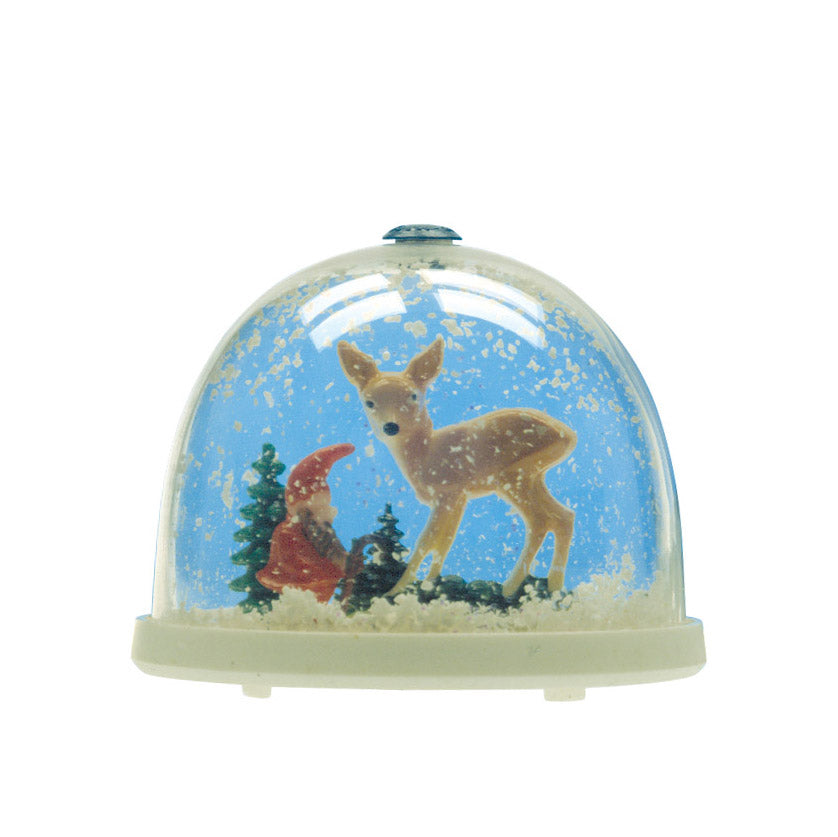
The first Dream Globe
By now they’re a global phenomenon. Everyone knows and loves these original snow globes, big and small, that were first mass-produced and sold in the 1950’s. But little is known about the history of the Dream Globe. Back in 1950, Bernhard Koziol was driving through the Odenwald Forest in his VW Beetle when the car slid to a halt in a snowdrift. He gazed out into the woods, and through the car’s oval rear window spotted deer standing among the snow-covered pine trees. This enchanted scene was captured in the world’s first-ever Dream Globe®.

1955 - 1965
Years of the German Economic Miracle
The era of austerity is over – Germany’s economic miracle calls for new products. Inspired by futuristic visions of life from America, German creativity and enthusiasm know virtually no bounds.
Everything seems possible: Alongside souvenir brooches, the product range expands to include decorative items, household goods, office supplies, and, for the first time, children’s toys.
1980
The next generation
The 1980s were a time of change in every respect. It was the era of the peace movement, aerobics, and Pac-Man. From fashion and hairstyles to product design, everything became asymmetrical, bold, and somewhat cool and detached.
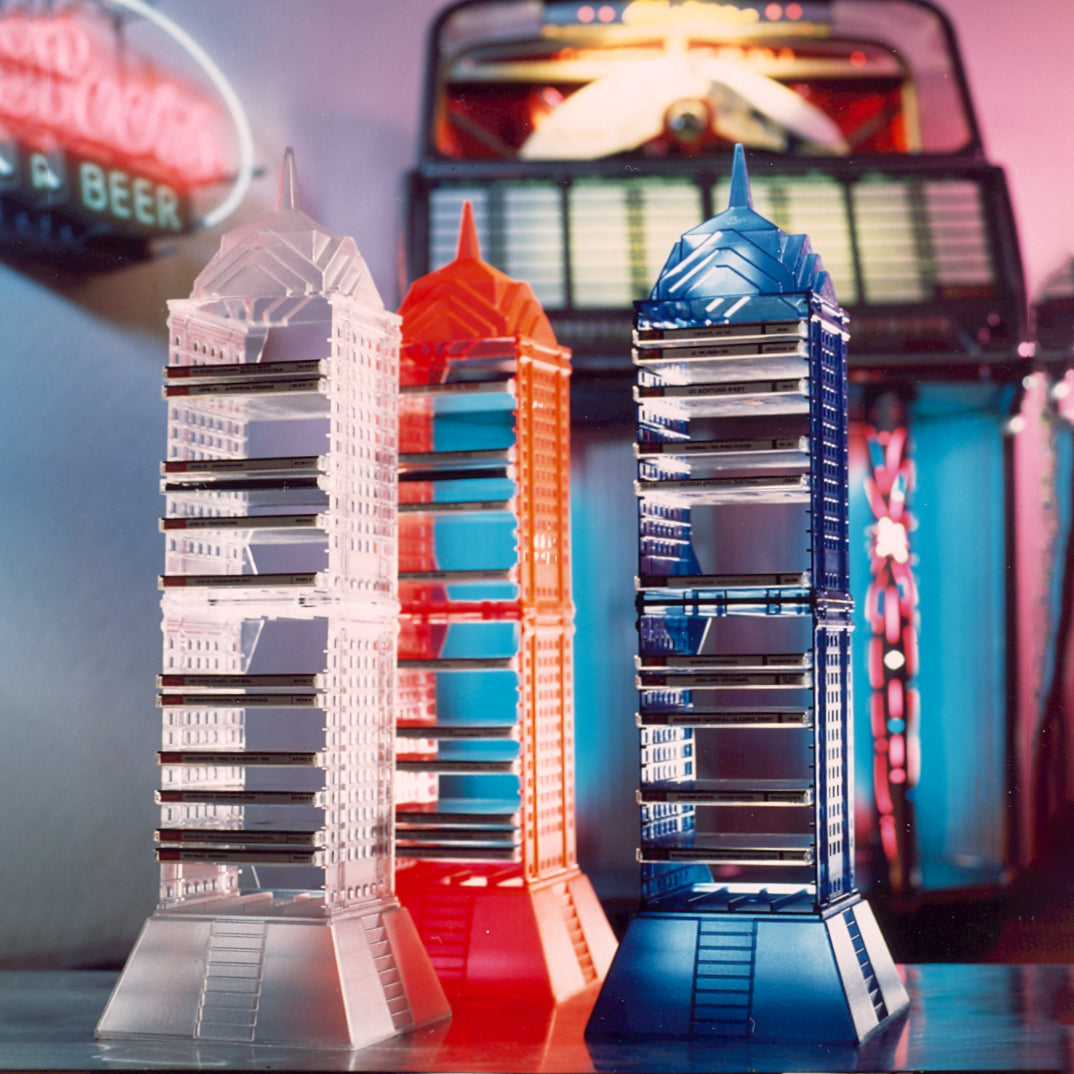
At the beginning of the new decade, the founder’s sons, Stephan and Bernhard Koziol, took over the company. They radically revamped the product range, appealing to a young, dynamic audience. The first bestseller was the Manhattan Tower, the first shelving system designed specifically for CDs.
2000
Form follows emotion
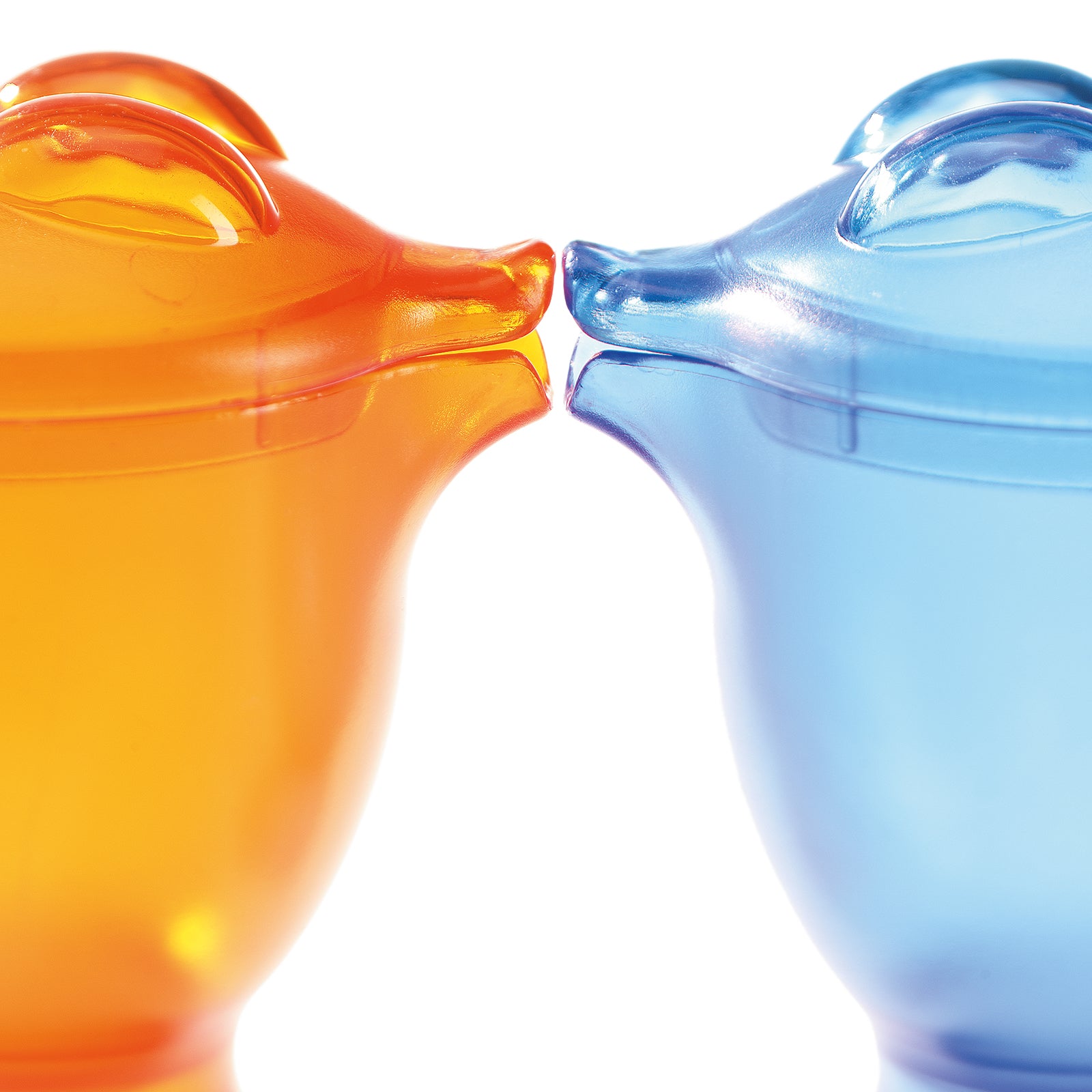
The 2000s marked the transition from an analog to a digital society. Design became freer and more playful, while the consumer world became increasingly emotional. Products no longer had to be merely practical or traditionally beautiful – they could have personality. Koziol is a master at transforming everyday products into coveted gifts and delights fans around the world with its cheerful characters.

2018
SUPER GLASS
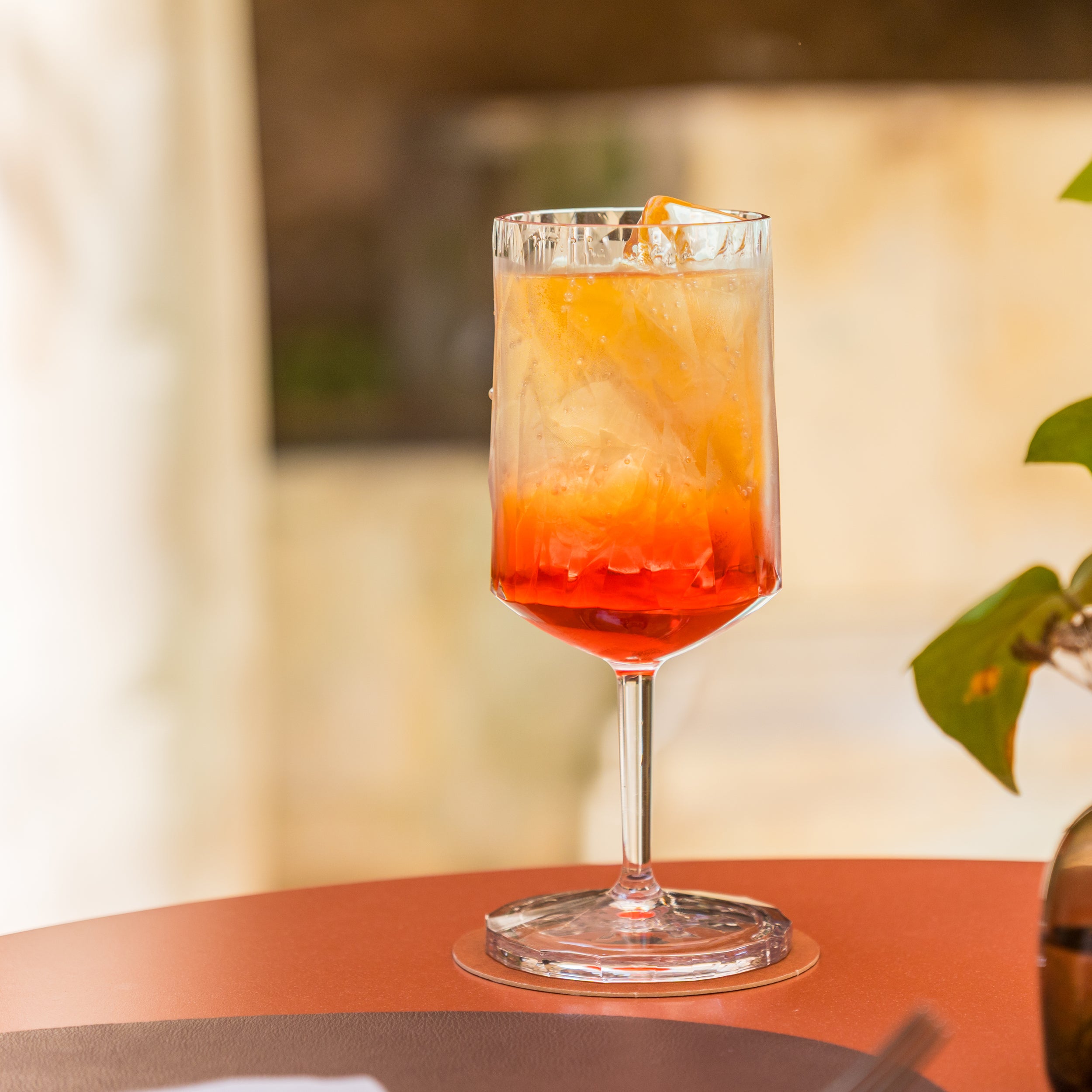
The unbreakable SUPERGLAS marks the beginning of a new era in reusable drinkware. With their unique, sparkling faceted design, these glasses set new standards in the hospitality and hotel industry. Virtually indestructible under normal use, they are perfectly suited for pools, beaches, spas, clubs, and lounges. Today, SUPERGLAS products can be found in luxury resorts, five-star hotels, and cruise ships around the world.